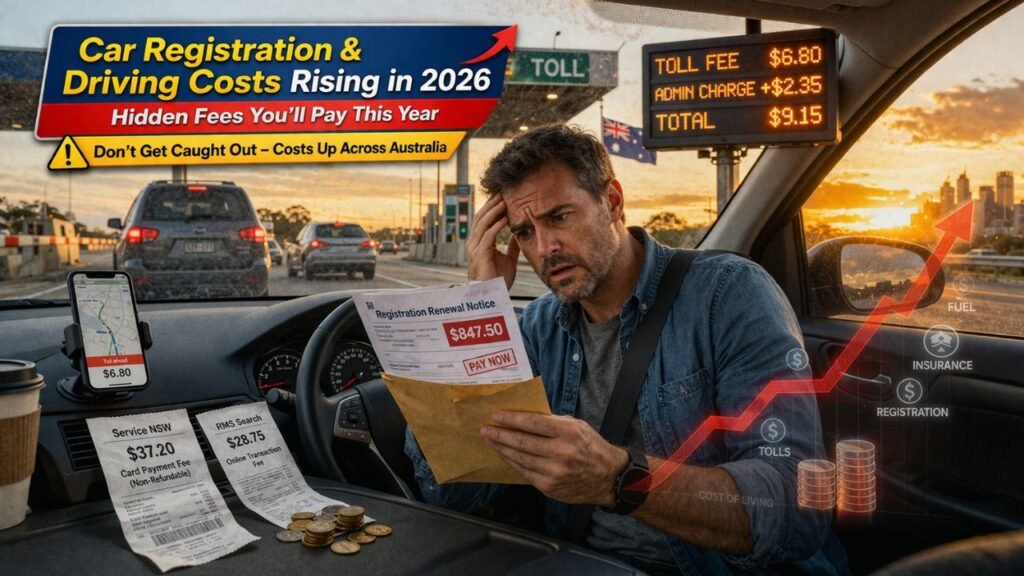
Owning a vehicle has long been associated with freedom, convenience, and flexibility. However, in 2026, the cost of driving in Australia is becoming a noticeably larger financial commitment. While many drivers expect modest increases in fuel or maintenance, fewer anticipate the growing list of registration charges, insurance adjustments, and lesser-known administrative fees that quietly add to annual expenses.
What makes this year different is not just the headline price rises, but the accumulation of hidden costs embedded within routine vehicle ownership. Understanding where these charges originate—and how they affect your overall budget—can help drivers make smarter financial decisions in an increasingly expensive motoring environment.
Why Driving Costs Are Rising in 2026

The rising cost of vehicle ownership reflects broader economic changes affecting infrastructure, insurance, and public safety systems. Governments and transport agencies are investing heavily in road maintenance, technology upgrades, and safety programs. These improvements require sustainable funding, which often comes from registration fees, insurance adjustments, and targeted levies.
At the same time, inflation continues to influence operational costs across industries. Higher repair costs, increased accident claims, and the transition toward new transport technologies have all contributed to increased pricing pressures.
For drivers, this means that what once seemed like stable annual expenses are now gradually rising, sometimes without clear visibility into the specific reasons behind each increase.
The Most Common Hidden Fees Affecting Drivers

Many motorists focus primarily on the base registration fee, but that figure rarely represents the total amount paid. A growing number of smaller charges are layered into vehicle ownership costs, making the final bill significantly higher than expected.
Compulsory Third Party (CTP) Insurance Adjustments
CTP insurance remains a mandatory requirement for registered vehicles. In 2026, premiums are increasing in many regions due to rising medical costs, higher claim volumes, and longer recovery periods for accident-related injuries.
These increases can add a noticeable amount to annual expenses. Even minor percentage adjustments can translate into meaningful cost differences when applied across millions of vehicles.
Registration Administration Charges

Administrative fees are becoming more common as registration systems shift toward digital platforms. These fees may cover transaction processing, system upgrades, or customer service support.
While each individual charge appears modest, the cumulative impact across multiple services—including registration renewals and vehicle updates—can be substantial over time.
Road Safety and Infrastructure Levies
Many registration packages now include levies designed to fund road maintenance, safety campaigns, and infrastructure development. These costs are often bundled into registration notices without detailed breakdowns, making them less visible to everyday drivers.
Despite their limited visibility, these levies contribute significantly to the overall cost of maintaining road networks and supporting long-term transport infrastructure.
Driver Licence Renewal Fees
Licence renewals are another area experiencing steady cost increases. Fees associated with issuing new licences, renewing existing ones, or replacing lost documentation are gradually rising.
In some regions, optional digital licence services may also carry additional charges, further contributing to annual driving expenses.
Environmental and Electric Vehicle Charges
As transportation systems evolve, new environmental policies are introducing targeted charges for certain vehicle types. Some regions are exploring usage-based charges designed to compensate for declining fuel tax revenue as electric vehicle adoption grows.
These emerging fees reflect broader changes in how transportation funding is structured in a low-emission future.
The True Cost of Vehicle Ownership in 2026
Many drivers underestimate the full cost of owning a car. Beyond registration and insurance, vehicle ownership includes numerous recurring expenses that collectively shape annual budgets.
Fixed Costs Are Increasing
Fixed costs—those that remain consistent regardless of driving distance—are rising steadily. These include registration, insurance, licensing, and compliance fees.
Even if driving habits remain unchanged, higher fixed expenses mean that annual ownership costs are climbing.
Variable Costs Continue to Fluctuate
Variable costs, such as fuel, servicing, and repairs, remain unpredictable. While fuel prices may fluctuate, the cost of vehicle maintenance is trending upward due to higher labor and parts expenses.
Modern vehicles, while technologically advanced, often require specialized servicing that can increase long-term ownership costs.
How Hidden Fees Affect Household Budgets
For many households, transportation is one of the largest recurring expenses after housing. Rising vehicle costs can influence financial planning in unexpected ways.
The Compounding Effect of Small Charges
A single additional fee may not seem significant. However, when multiple small charges accumulate—across registration, insurance, licensing, and service transactions—the overall financial impact becomes noticeable.
Over the course of a year, these hidden fees can add hundreds of dollars to total driving costs without clear visibility into where the money is being allocated.
Budget Planning Becomes More Important
As expenses grow more complex, careful budgeting becomes essential. Tracking total vehicle-related spending—not just major payments—helps households anticipate future costs and avoid financial surprises.
Practical Ways to Manage Rising Driving Costs
While some fees are unavoidable, there are several strategies drivers can use to minimize their financial burden and maintain greater control over transportation expenses.
Review Registration Statements Carefully
Registration notices often contain detailed breakdowns of included charges. Reviewing these statements helps drivers identify changes from previous years and better understand how total costs are calculated.
Compare Insurance Options Regularly
Insurance premiums can vary significantly depending on coverage type, driving history, and vehicle classification. Comparing available options periodically may reveal opportunities to reduce annual costs without sacrificing essential protection.
Plan Renewals Ahead of Deadlines
Late payments often attract penalty fees, which add unnecessary expenses. Setting reminders for registration and licence renewals helps avoid additional charges and ensures uninterrupted driving privileges.
Consider Vehicle Efficiency
Vehicle selection plays a major role in long-term affordability. Smaller, fuel-efficient vehicles typically cost less to register and insure, making them attractive options for budget-conscious drivers.
Monitor Emerging Policy Changes
Transport policies are evolving rapidly, particularly as governments transition toward sustainable mobility solutions. Staying informed about upcoming changes allows drivers to prepare financially and adjust transportation plans accordingly.
The Role of Technology in Driving Costs
Modern transportation systems rely increasingly on digital services. While these technologies improve efficiency and convenience, they also introduce new cost structures.
Digital Services and Convenience Fees
Online payment systems, automated reminders, and digital documentation platforms often involve processing fees. These charges help maintain system reliability but contribute to incremental increases in total ownership costs.
Advanced Vehicle Technology
New vehicles are equipped with sophisticated safety and connectivity features. While these innovations enhance safety and comfort, they may increase repair costs and insurance premiums due to the complexity of replacement components.
Looking Ahead: The Future of Driving Costs
The trend toward rising vehicle expenses is expected to continue as infrastructure demands grow and environmental policies evolve. Drivers should anticipate gradual changes rather than sudden increases, with adjustments becoming part of routine financial planning.
Shifting Funding Models
Traditional fuel-based funding systems are changing as vehicle technology evolves. Governments are exploring alternative funding methods, including usage-based charges and environmental levies.
These changes are designed to maintain reliable revenue streams for road infrastructure while supporting sustainability goals.
Increasing Focus on Efficiency
Efficiency—both financial and environmental—will likely become a central theme in transportation planning. Vehicles that deliver lower operating costs and improved energy efficiency may offer long-term financial advantages.
Final Thoughts: Staying Financially Prepared in 2026
Driving remains an essential part of daily life for many households, but the cost of maintaining a vehicle is becoming increasingly complex. The rise in registration fees, insurance premiums, and hidden administrative charges highlights the importance of understanding the full financial picture of vehicle ownership.
By reviewing expenses carefully, planning renewals in advance, and staying informed about policy changes, drivers can better manage rising costs and maintain financial stability.
Ultimately, awareness is the most valuable tool in navigating the evolving landscape of vehicle ownership. As fees continue to shift and expand, informed drivers will be best positioned to adapt, budget effectively, and make confident decisions about their transportation future.