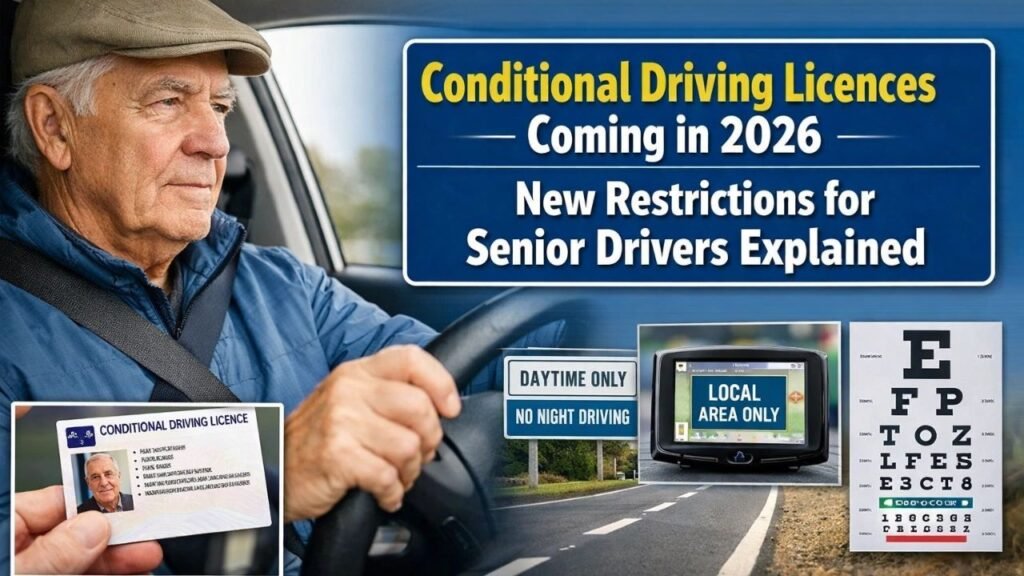
For many older adults, driving represents freedom, independence, and connection to daily life. From attending medical appointments to maintaining social ties, the ability to drive often supports both practical needs and emotional wellbeing. In 2026, however, a major policy shift will introduce expanded use of conditional driving licences, particularly for senior drivers.
Rather than removing licences entirely, transport authorities are moving toward a more flexible, personalized system. This new approach aims to balance road safety with independence—allowing individuals to continue driving under specific conditions tailored to their abilities.

Here’s a clear, comprehensive guide to what conditional licences are, why they are expanding in 2026, and how drivers can prepare.
Understanding Conditional Driving Licences
A conditional driving licence allows an individual to continue driving legally, but with defined restrictions designed to enhance safety.
These licences are typically issued after medical or functional assessments identify limitations that could affect driving performance. Instead of revoking driving privileges, authorities apply specific conditions that reduce risk while maintaining mobility.
How Conditional Licences Work

Conditional licences are based on individual needs rather than age alone. Assessments may include:
Medical evaluations by general practitioners or specialists
Vision testing, including peripheral awareness
Physical mobility assessments
Cognitive screening when necessary
Driving performance reviews in some cases
The outcome determines whether restrictions are required and what those restrictions will be.

This individualized model represents a significant departure from older systems that relied more heavily on age-based thresholds.
Why Conditional Licences Are Expanding in 2026
The expansion of conditional licences reflects evolving demographics and advances in medical assessment methods.
Key Drivers Behind the Policy Shift
Several factors are shaping the transition.
An Ageing Population
The number of older drivers is steadily increasing, creating a greater need for systems that support safe, long-term driving.
Improved Medical Understanding
Healthcare professionals now have better tools to assess functional ability, allowing more precise decisions about driving fitness.
Safety-Focused Road Policies
Research shows that tailored restrictions can significantly reduce accident risk without removing driving privileges altogether.
A Move Away From “All-or-Nothing” Licensing
Traditional systems often forced authorities to choose between full licences or cancellations. Conditional licensing introduces flexibility and fairness.
Overall, the new model aims to preserve independence while addressing real safety concerns.
Common Restrictions Under Conditional Licences
Not every conditional licence looks the same. Restrictions are customized based on individual needs, health conditions, and risk levels.
Typical Conditions You May Encounter
Drivers issued conditional licences may face one or more of the following limitations.
Daylight-only driving that prohibits driving after sunset
Distance restrictions that limit travel within a specified radius
Road-type restrictions that avoid highways or high-speed roads
Traffic limitations that prevent driving during peak-hour congestion
Mandatory corrective lenses such as glasses or contact lenses
Vehicle modifications including adaptive equipment
Zero alcohol requirements with stricter limits
Periodic reassessments to review driving ability
These measures are designed to match real-world challenges faced by drivers, not to impose unnecessary burdens.
The Role of Medical Assessments
Medical evaluations are central to the conditional licensing framework. Healthcare professionals act as key decision-makers, providing detailed recommendations based on medical findings.
What the Assessment Process May Include
A typical evaluation could involve:
General health examination
Vision clarity and peripheral testing
Reaction time assessments
Mobility and coordination testing
Cognitive screening where appropriate
In some cases, drivers may also undergo an on-road driving assessment to demonstrate safe operation under real conditions. Doctors may recommend specific conditions that reflect both medical history and current ability.
Comparing Full Licences and Conditional Licences
Understanding the difference between traditional licences and conditional ones helps clarify what to expect.
Full Licence
No driving restrictions
Standard renewal schedule
Minimal medical reporting
Full access to roads and driving times
Conditional Licence
Customized restrictions applied
More frequent renewals
Mandatory medical oversight
Limited driving environments
Increased monitoring and compliance
While conditional licences involve more oversight, they also extend driving eligibility that might otherwise be lost.
Financial Considerations for Drivers
Although the focus of conditional licensing is safety, there may also be financial implications.
Possible Costs to Consider
Drivers may encounter expenses such as:
Medical consultation fees
Specialist referrals
Vision testing charges
Vehicle modification costs
Administrative processing fees
Transport costs to attend assessments
These costs can vary significantly depending on individual needs and regional policies. Planning ahead financially can help reduce stress during the transition process.
Benefits of Conditional Licensing
While restrictions may initially feel limiting, conditional licensing offers several advantages that support long-term independence.
Key Benefits
Continued mobility that allows drivers to travel independently
Improved road safety through reduced accident risks
Greater personal control over driving capability
Extended driving years under safer conditions
This balanced approach supports both individual needs and broader community safety.
Preparing for the Transition
For drivers approaching the age range where conditional licences become more common, preparation is essential.
Practical Steps to Take
Schedule regular health check-ups to monitor potential issues
Keep medical records updated for easier assessments
Maintain vision health through routine eye examinations
Stay physically active to support coordination and reaction time
Understand your local rules to avoid unexpected changes
Being proactive allows drivers to navigate the process with confidence.
Compliance and Legal Responsibilities
Following licence conditions is not optional. Non-compliance can lead to serious consequences that affect both safety and legal status.
Risks of Ignoring Conditions
Drivers who fail to follow restrictions may face:
Financial penalties
Licence suspension
Legal liability in accidents
Insurance complications
Permanent loss of driving privileges
Understanding and respecting licence conditions is critical to maintaining legal driving status.
The Future of Driver Safety
Conditional licensing represents a broader shift toward personalized regulation. Technology and healthcare advancements are making it possible to create more precise assessments of driving ability. Digital reporting systems and real-time monitoring tools are also expected to play larger roles in the coming years.
This modern approach signals a future where driving eligibility is determined by capability rather than simply age.
Final Thoughts
The expansion of conditional driving licences in 2026 reflects a thoughtful evolution in road safety policy. By introducing tailored restrictions instead of blanket licence removals, authorities aim to support independence while protecting public safety.
For senior drivers, the key to navigating these changes lies in preparation, awareness, and proactive health management. Understanding the system early ensures smoother transitions and preserves mobility for as long as safely possible.
Ultimately, conditional licensing is not about limiting freedom. It is about sustaining independence responsibly in an increasingly safety-conscious world.