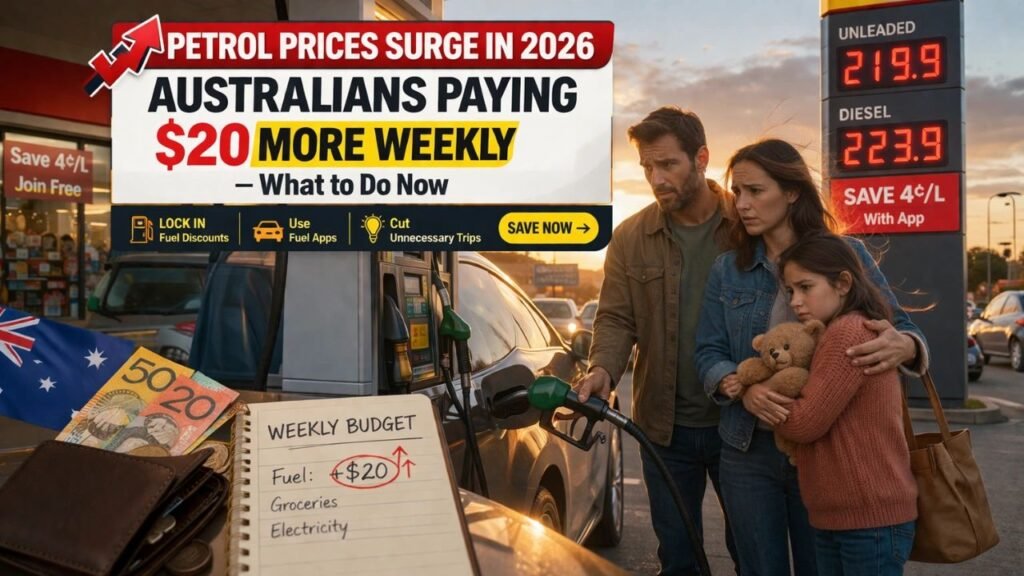
Fuel costs have always been a sensitive household expense, but in 2026, petrol prices have become a growing financial pressure for many Australian families. What was once a routine weekly stop at the pump is now a moment of calculation, with drivers watching the total rise faster than expected.
Across the country, households are now spending approximately $20 more per week on fuel compared to previous years. While this may seem modest at first glance, the long-term impact is significant—adding hundreds, and in some cases thousands, of dollars to annual living costs. For commuters, families with multiple vehicles, and regional drivers, the increase is particularly noticeable.
Why Petrol Prices Are Rising in 2026

The surge in fuel prices is not caused by a single factor. Instead, it reflects a combination of global market dynamics and domestic economic conditions that continue to influence fuel supply and pricing.
Global Oil Supply Pressures
Crude oil remains the primary ingredient in petrol production, and fluctuations in global oil supply directly affect prices at the pump. In 2026, supply constraints have tightened the availability of crude oil, driving costs upward.
Geopolitical tensions in key oil-producing regions have also disrupted supply chains, creating uncertainty and pushing prices higher worldwide. When supply becomes unpredictable, markets respond with higher prices to balance demand.
Currency and Import Costs

Australia imports a significant portion of its refined fuel. When the national currency weakens against major global currencies, import costs rise. This exchange rate pressure translates into higher prices for consumers.
Even small currency movements can influence the final cost per litre, particularly when combined with global price increases.
Higher Refining and Distribution Expenses
Refining fuel and transporting it across large distances adds to overall cost. Rising energy prices, labour costs, and logistics expenses have increased the operational costs associated with fuel production and delivery.

Regional areas often experience higher prices because fuel must travel longer distances to reach service stations, increasing transport-related costs.
Increased Demand from Economic Activity
As travel, tourism, and business operations expand, fuel demand naturally increases. Higher demand during periods of economic recovery or growth places additional pressure on supply chains, contributing to price increases.
The Real Financial Impact on Households
While fuel prices fluctuate frequently, the overall upward trend is clearly visible in weekly budgets. Even modest increases per litre can significantly affect total spending over time.
Average Weekly and Annual Costs
For the typical driver, the increase translates into:
- $15–$25 more per week on fuel
- $780–$1,300 additional spending per year
- Greater impact for families operating two or more vehicles
- Higher annual costs for long-distance commuters
For households already managing rising housing, food, and utility costs, increased fuel spending compounds financial strain.
Regional Drivers Face Higher Costs
Drivers living outside major urban centres often rely heavily on private vehicles due to limited public transport options. Longer travel distances—combined with higher regional fuel prices—can significantly increase monthly expenses.
This reality makes fuel cost management especially important for regional households.
Broader Economic Effects of Rising Fuel Prices
Fuel is not just a transportation expense—it is a core component of the broader economy. When fuel costs rise, the ripple effects extend far beyond personal budgets.
Rising Transport and Delivery Costs
Businesses rely on fuel to transport goods across cities and regions. When fuel becomes more expensive, transportation costs increase, and businesses often pass those costs on to consumers.
This can lead to higher prices for everyday essentials such as groceries, clothing, and household goods.
Inflationary Pressure Across Industries
Fuel prices influence nearly every industry, from agriculture to manufacturing. Increased fuel costs raise operational expenses, contributing to overall inflation.
As inflation rises, household purchasing power declines, making cost control strategies more important than ever.
Practical Strategies to Reduce Fuel Expenses
While drivers cannot control global oil markets, they can adopt practical habits that reduce fuel consumption and improve efficiency. Small adjustments in driving behaviour and vehicle maintenance can generate meaningful savings over time.
Compare Fuel Prices Before Filling Up
Fuel prices often vary significantly between service stations, even within the same suburb. Using price comparison tools or checking local listings can help identify the most cost-effective option nearby.
Over the course of a year, consistently choosing lower-priced stations can produce noticeable savings.
Drive Smoothly and Avoid Aggressive Acceleration
Rapid acceleration and sudden braking increase fuel consumption. Smooth driving helps maintain consistent engine performance and improves fuel efficiency.
Maintaining steady speeds—particularly on highways—can reduce fuel usage and extend vehicle lifespan.
Combine Trips to Reduce Travel Frequency
Planning errands strategically helps minimize unnecessary travel. Instead of making multiple short trips, combining tasks into a single journey reduces fuel usage and saves time.
This simple habit can produce immediate weekly savings.
Maintain Proper Tyre Pressure
Underinflated tyres create additional rolling resistance, forcing engines to work harder and burn more fuel. Checking tyre pressure regularly improves efficiency and enhances safety.
Routine maintenance remains one of the most effective ways to control fuel consumption.
Reduce Excess Vehicle Weight
Carrying unnecessary items in the boot increases vehicle weight, requiring more fuel to maintain speed. Removing unused equipment and keeping the vehicle light improves fuel economy.
Considering Alternative Transport Options
For many households, reducing reliance on private vehicles offers long-term financial benefits.
Public Transport and Shared Travel
Where available, public transport provides a cost-effective alternative to daily driving. Carpooling with colleagues or family members can also significantly reduce individual fuel expenses.
Shared travel reduces both financial costs and environmental impact.
Cycling and Walking for Short Distances
For shorter journeys, cycling or walking can replace vehicle use entirely. These alternatives not only reduce fuel spending but also support personal health and well-being.
Exploring Fuel-Efficient and Alternative Vehicles
Long-term solutions may involve upgrading to vehicles designed for improved efficiency.
Hybrid Vehicles
Hybrid vehicles combine traditional engines with electric motors, reducing overall fuel consumption. While initial purchase costs may be higher, fuel savings over time can offset the investment.
Electric Vehicles
Electric vehicles eliminate petrol usage entirely, offering long-term cost advantages. Although charging infrastructure and purchase costs remain considerations, growing adoption is making electric vehicles increasingly practical.
Smart Budgeting in a High-Fuel-Cost Environment
Managing rising fuel costs requires proactive financial planning. Incorporating fuel expenses into monthly budgeting allows households to prepare for ongoing price fluctuations.
Track Weekly Fuel Spending
Monitoring spending patterns helps identify areas where consumption can be reduced. Keeping records also highlights seasonal changes in usage.
Set Realistic Monthly Fuel Limits
Allocating a fixed budget for fuel encourages mindful driving and supports better financial discipline.
Looking Ahead: Preparing for Continued Price Volatility
Fuel markets are inherently unpredictable, and short-term price stability is not guaranteed. Global supply conditions, currency movements, and demand trends will continue influencing petrol costs in the years ahead.
Drivers who adopt efficient habits now are better positioned to manage future price increases without significant disruption to their daily routines.
Final Thoughts: Taking Control of Fuel Costs in 2026
The rise in petrol prices during 2026 is a clear reminder that fuel costs remain a critical component of household budgets. While external market forces may be beyond individual control, daily driving habits and smart planning can make a meaningful difference.
By focusing on efficiency, maintaining vehicles properly, and exploring alternative transport solutions, households can reduce the financial pressure created by rising fuel costs.
In an environment where every dollar counts, proactive fuel management is no longer optional—it is an essential part of modern financial resilience.