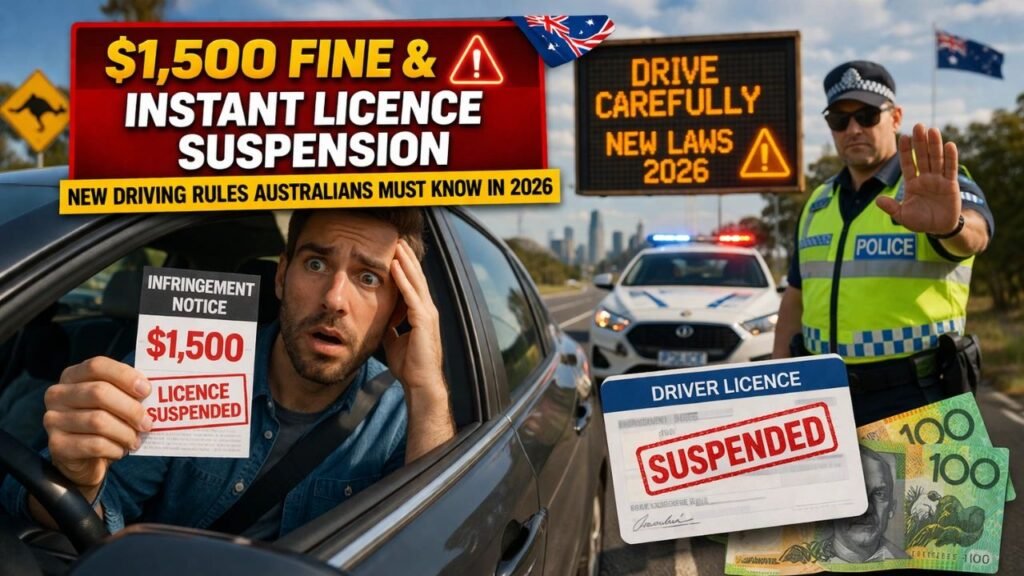
Australia’s road safety landscape is undergoing a significant transformation in 2026, with tougher penalties and faster enforcement reshaping how drivers approach everyday travel. A brief distraction, a moment of excessive speed, or ignoring updated regulations could now lead to substantial fines—up to $1,500—and even immediate licence suspension in serious cases.
These changes are not simply about enforcement—they reflect a broader national effort to reduce road fatalities and encourage responsible driving behaviour. For motorists, staying informed is no longer optional; it is essential for protecting both safety and driving privileges.
Why Driving Rules Are Tightening in 2026
Road safety authorities have identified a troubling pattern: preventable behaviours such as distraction, speeding, and reckless driving remain among the leading causes of serious accidents.
Over the past few years, increased vehicle usage, faster urban growth, and rising reliance on mobile technology have created new risks on the road. In response, policymakers have introduced stricter penalties designed to deter dangerous behaviour before it leads to tragedy.
The updated rules focus on three key objectives:
- Reducing fatal crashes and serious injuries
- Improving driver accountability
- Leveraging modern technology for consistent enforcement

These reforms signal a shift from reactive policing to proactive prevention.
Key Changes Drivers Need to Understand
The 2026 updates bring noticeable changes to both fines and enforcement methods. While the exact figures may vary by state or territory, the direction is consistent nationwide—higher penalties and faster consequences.
Increased Financial Penalties
One of the most visible changes is the rise in fines for major offences. Serious violations—particularly those linked to distraction or excessive speed—can now attract fines reaching up to $1,500.

This increase is designed to make penalties meaningful enough to discourage repeat behaviour. Minor violations may still carry smaller fines, but high-risk actions now come with significantly greater financial consequences.
Immediate Licence Suspension
In certain cases, drivers may lose their licence instantly rather than waiting for court proceedings or administrative reviews.
Immediate suspension may apply to:
- Dangerous or reckless driving
- High-range speeding offences
- Driving under the influence of alcohol or drugs
- Street racing or aggressive driving
- Serious mobile phone misuse while driving
For many motorists, the risk of losing driving privileges on the spot is likely to be a stronger deterrent than fines alone.
Stricter Rules on Mobile Phone Use
Mobile phone distraction remains one of the fastest-growing safety threats on modern roads. Even brief interaction—such as checking notifications—can significantly increase reaction time and accident risk.
The 2026 rules place heavy emphasis on eliminating unsafe phone use while driving.
What Is Now Considered Risky Use
The following behaviours may result in heavy penalties:
- Texting or messaging while driving
- Watching videos or using social media
- Holding a phone while operating a vehicle
- Using devices without approved hands-free systems
Hands-free technology may still be permitted where legally allowed, but strict compliance is essential.
Why Phone Enforcement Is Expanding
Authorities are increasingly using advanced camera systems capable of detecting handheld devices from a distance. These systems operate continuously and reduce reliance on manual enforcement alone.
The result is a much higher probability of detection—even for brief violations.
Speeding Penalties Are Becoming More Severe
Speeding has long been associated with serious road accidents, particularly when drivers exceed limits by a significant margin.
Under the 2026 updates, penalties for excessive speed have been strengthened to reflect the risk involved.
High-Speed Violations
Drivers exceeding limits by large margins may face:
- Larger financial penalties
- Immediate licence suspension
- Increased demerit points
- Potential vehicle impoundment in severe cases
These consequences highlight the importance of maintaining speed awareness, particularly in residential areas and high-risk zones.
The Role of Technology in Modern Enforcement
One of the most significant developments in 2026 is the increased use of technology to monitor driver behaviour.
Traditional enforcement relied heavily on police patrols and roadside stops. Today, automated systems play a central role in identifying violations quickly and accurately.
AI-Powered Monitoring Systems
Modern enforcement tools include:
- High-resolution roadside cameras
- Automated speed detection systems
- AI-powered mobile phone detection cameras
- Integrated licence recognition technology
These tools allow authorities to identify violations with greater consistency and efficiency.
Benefits of Automated Enforcement
Technology-driven monitoring offers several advantages:
- Reduced human error
- Faster identification of offences
- Improved consistency in penalties
- Greater road safety coverage across urban and rural areas
For drivers, this means that compliance is more important than ever—violations are increasingly difficult to avoid detection.
Repeat Offenders Face Faster Consequences
The updated rules also introduce stricter treatment for repeat offenders.
Drivers who accumulate multiple violations within a short period may face accelerated suspension timelines. This reflects a broader focus on identifying patterns of unsafe behaviour rather than treating incidents in isolation.
Increased Demerit Point Impact
Repeat offences may result in:
- Faster accumulation of demerit points
- Earlier licence suspension thresholds
- Longer suspension durations
- Mandatory safety education requirements
This structured approach aims to correct behaviour before it escalates into more serious incidents.
How These Changes Affect Everyday Drivers
For most drivers, the new rules will not disrupt daily routines—as long as safe driving habits are maintained. However, those who rely heavily on multitasking or habitually exceed speed limits may notice the greatest impact.
The combination of higher fines, immediate suspensions, and automated enforcement significantly increases the consequences of risky behaviour.
Practical Habits to Reduce Risk
Drivers can adapt to the new environment by focusing on simple safety habits.
Stay Fully Focused
Avoid handling phones or engaging in distractions while driving. Even short distractions can now lead to major penalties.
Monitor Speed Regularly
Pay close attention to posted speed limits, especially in unfamiliar areas or changing road conditions.
Understand Local Variations
Although the overall direction is national, individual states may implement slightly different thresholds or fine amounts.
Track Demerit Points
Knowing your current demerit point balance can help prevent unexpected suspensions.
The Bigger Picture: Safer Roads Through Accountability
Experts widely agree that stronger penalties alone are not enough—but when combined with education and awareness campaigns, they can produce meaningful safety improvements.
Research suggests that higher penalties and visible enforcement can reduce repeat offences significantly. When drivers understand that violations carry real consequences, compliance tends to increase naturally.
Education Still Matters
While enforcement tools are becoming more advanced, public education remains a vital component of long-term safety.
Awareness campaigns, defensive driving programs, and updated driver training materials help reinforce responsible habits from the earliest stages of licensing.
Preparing for the Future of Driving
Australia’s 2026 driving rule updates represent a clear shift toward stricter accountability and smarter enforcement. The message is straightforward: safe driving is no longer just encouraged—it is expected.
For drivers, adapting to these changes involves more than memorizing penalties. It means adopting safer habits, respecting speed limits, and minimizing distractions behind the wheel.
Ultimately, the goal is not to punish motorists but to create safer roads for everyone. With stronger rules, smarter technology, and greater awareness, the future of driving is moving toward higher responsibility—and significantly lower risk.